

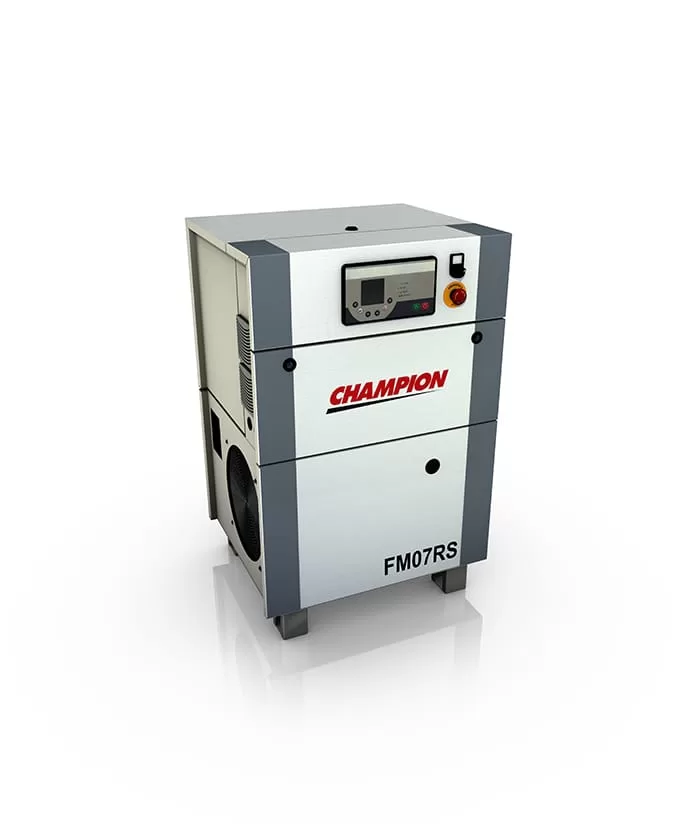
Sometimes called flooded or oil-injected rotary screw, oil lubricated screw compressors use lubricant within the compression chamber to cool and lubricate the compressor element. The lubricant helps to form a seal and also has a great noise-damping effect.
Oil lubricated compressors are reliable, hardy, and efficient, making them suitable for a variety of production processes. Downstream equipment such as oil filters and dryers can remove any oil contamination from the end product, creating a clean compressed air flow suitable for building work, waste management, quarrying, recycling and many other uses.
CompAir design and manufacture a complete range of oil lubricated screw compressors from 2 to 250 kW with airflows from 0.24 to 47 m3/min and pressure ranges from 5 to 13 bar.
Oil vs. Oil-Free Air Compressors
The distinctions between oiled and oil-free air compressors encompass a wide range of factors, extending well beyond the mere presence or absence of oil. Let’s delve into the benefits and drawbacks of oiled and oil-free air compressors across various critical aspects, ranging from size to air quality.
Size: In terms of size, oil-free compressors typically have a smaller footprint compared to lubricated air compressors since they do not require additional space for oil storage. Consequently, oil-free compressors also exhibit greater portability. If your specific application involves the need to transport the air compressor within your worksite, an oil-free option may prove to be the most suitable choice.
Environments: Lubricated compressors suit warm climates due to oil performance, while oil-free ones are better in cooler areas for efficiency. Extreme temperatures influence your choice between these compressor types, matching them to specific climate conditions.